Your product passed QC.
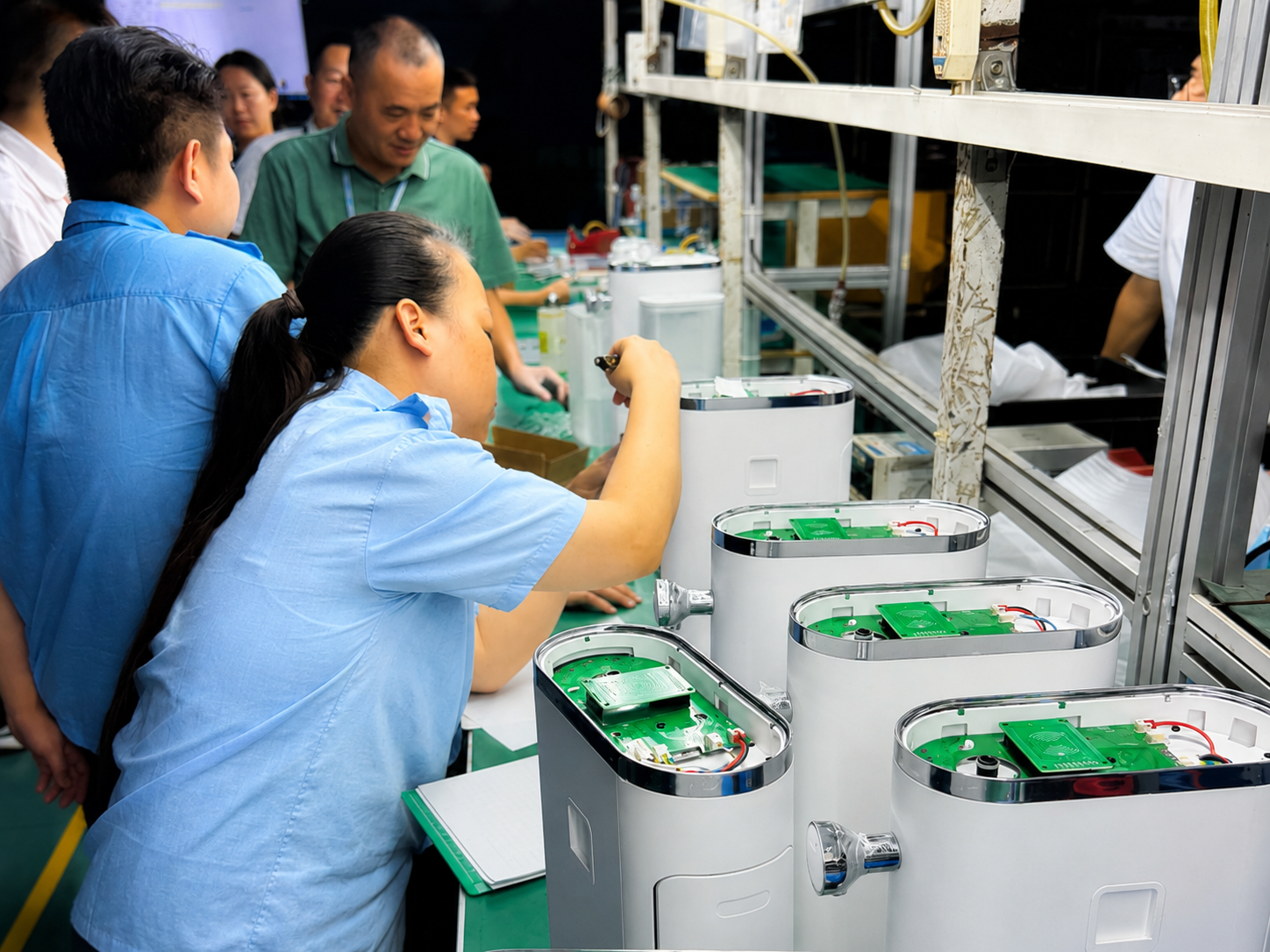
Production is complete. The cartons are sealed. The factory is ready to release the goods.
Congratulations.
You are halfway.
The right product still needs to reach the right market, clear customs, survive the journey and arrive at a landed cost your business can sustain.
And here is the uncomfortable part:
If you are only starting to think about shipping now, you are already late.
Your packaging dimensions are locked. Your SKU structure has been defined. Your product classification affects customs duties. Your sales channels determine the labelling and fulfilment requirements. Your commercial terms decide who controls each part of the journey.
The decisions that determine whether the shipment works were made long before the forwarder received the booking.
At Supernova, we do not treat logistics as the freight task that comes after manufacturing. Because we sit upstream in the supply chain, we help align the product, packaging, documentation and logistics plan before the goods move.
The objective is not simply to get products out of the factory.
It is to get the right product to the right customer or channel—intact, compliant, traceable, on time and at a landed cost the business can survive.
That is the difference between shipping products and building a global hardware business.
Reliable international shipping rarely comes from finding one perfect freight forwarder.
It comes from making the right commercial and operational decisions before the product is ready to move.
Which markets are you entering? Which sales channels will you use? How many product versions do you need? Who will import the goods? Will orders go to a distributor, a retailer, a regional warehouse, a third-party logistics provider—or 3PL—or directly to customers?
These questions influence far more than transportation.
They affect product configuration, packaging, labels, documentation, inventory allocation, customer experience and margin.
A product going to Amazon FBA, a European distributor, a US retail chain and Kickstarter backers across 40 countries cannot follow one universal logistics model. Each channel has different requirements and a different cost structure.
Global shipping is not a freight task added after manufacturing.
It is an operating system that needs to be designed around the product and the way the company intends to sell it.
A manufacturing partner does not replace the freight forwarder, customs broker or 3PL.
But many logistics decisions are shaped inside or close to the factory: packaging dimensions, master cartons, product configuration, SKU labels, carton marks, packing lists, palletisation, inspection timing and the container loading plan.
If those decisions are handled too late, the logistics team can only work around whatever has already been produced.
A freight forwarder can move the goods. They cannot redesign an oversized carton, simplify a confused SKU structure or recover a margin that disappeared because the fulfilment model was never calculated properly.
That is why we stay involved beyond production at Supernova. Our role is to connect what happens on the production side with what needs to happen across freight, customs, warehousing and fulfilment.
We are not trying to become the freight company.
We are making sure the product is ready to move before the freight company receives it.
A SKU—stock keeping unit—is an operational definition of what you are selling.
It identifies the product version, market, colour, plug, accessory set, packaging, language, compliance markings, barcode and sometimes the sales channel itself.
If the SKU structure is unclear, the whole operation becomes fragile.
The factory can pack the wrong plug. A distributor can receive the wrong language version. A retailer can reject inventory because the carton labels do not match its routing guide. The warehouse can receive products it cannot identify correctly.
These may look like warehouse or packing mistakes. Usually, they started with an incomplete SKU definition.
The complexity also grows faster than founders expect. One connected device can become a US version, EU version and UK version, multiplied by several colours, bundles and retailer-specific configurations.
Every additional SKU creates more forecasting work, more inventory exposure and another opportunity to send the wrong product to the wrong market.
Sometimes the best logistics decision is to reduce the number of versions before scaling.
E-commerce needs parcel fulfilment, tracking, returns and responsive customer support. Crowdfunding creates fragmented demand across many countries, often before the final dimensions, weight and duties are fully understood.
Retail introduces barcodes, carton labels, delivery windows, pallet requirements, routing instructions and potential chargebacks. Distributors care about bulk economics, regional inventory and consistent documentation.
The same unit may need to be prepared differently depending on where and how it will be sold.
This is why channel strategy belongs in the logistics conversation early. If the commercial team defines the channels after production is planned, the operations team may discover that the packaging, labels or margins do not support them.
Founders often compare shipping options by looking at the number in bold.
But freight is only one part of the real cost.
Landed cost is what each sellable unit has cost by the time it reaches the market. Depending on the model, it can include:
This is where apparently successful products can become impossible to scale.
The company is shipping. Revenue is coming in. Customers are buying. But every carton, return and warehouse intervention quietly consumes the margin.
The business looks like it is growing from the outside. Inside, every batch is creating more operational pressure and less cash.
That is movement, not scale.
The relevant question is not simply, “What will this shipment cost?”
It is:
What will each sellable unit cost after it has reached the channel or customer?
If the margin does not survive that calculation, higher volume will not rescue the model. It will amplify the damage.
Packaging has to present the product well, but it also has to survive distribution.
A box can look premium in the sample room and still perform badly after weeks of stacking, vibration, compression, humidity, handling and last-mile delivery.
Packaging validation may include drop, vibration and compression testing, depending on the product and distribution journey. The objective is to test the packaged product as a complete system—not just admire the box on a table.
Too little protection creates damage, returns and replacements. Too much packaging creates unnecessary material, freight and warehouse costs.
The right packaging protects the product without shipping empty space around it.
Freight is not always priced according to actual weight. Carriers also consider how much space a shipment occupies.
This is known as dimensional or volumetric weight.
An unnecessarily large retail box can increase parcel costs, reduce the number of units per master carton and lower the number of cartons that fit into a container. It can also increase warehouse storage and handling costs.
Every unnecessary centimetre is multiplied across the production volume.
This is why packaging development is not only a branding exercise. It is part of design-to-cost and logistics engineering.
Retail-box dimensions, inner cartons, master cartons, pallet configuration and container utilisation all influence the real cost per unit.
A beautiful box that destroys the margin is not a premium packaging solution.
It is an expensive design decision.
Container loading is often treated as the final warehouse operation.
It should be treated as part of the quality and cost plan.
A poor loading plan can waste container space, deform cartons, create unstable weight distribution and damage products that passed every factory inspection.
Cartons need to be arranged according to their dimensions, strength and weight. The load may need to be blocked, braced, lashed and secured so it cannot shift or collapse during transit.
The team also needs to decide whether the goods will be floor-loaded or palletised. Pallets can simplify handling and protect the cartons, but they also consume container volume. The right choice depends on the product, destination and receiving setup.
A product can pass final QC and still arrive damaged because the loading plan was treated as an afterthought.
The unit may have been good when it left the production line.
The commercial outcome was not.
Customs planning starts with knowing what the product actually is.
The Harmonized System, or HS, provides an international six-digit structure for classifying traded goods. Destination markets can then add further digits through their own national tariff schedules.
That distinction matters.
Your product needs the correct HS classification and, where applicable, the correct destination-market tariff code. This can affect duties, reporting requirements, import controls and the documents needed for clearance.
A wireless device, accessory, battery-powered product and replacement component may not be treated the same way, even when they belong to the same commercial product family.
The manufacturer and freight forwarder can provide useful product information, but the final classification should be confirmed with the importer, customs broker or qualified trade adviser in the destination market.
Guessing a code because it produces a lower duty is not a customs strategy.
The commercial invoice, packing list and customs declaration should describe the same shipment.
Product descriptions, quantities, declared values, carton counts, weight, origin and classification must be consistent. If the product contains lithium batteries, wireless modules or other regulated elements, the correct transport and compliance documentation must also be available.
The information should be specific enough for customs to understand what is being imported. “Electronic sample” or “accessory” is rarely a useful product description for a commercial shipment.
A documentation error can block perfectly manufactured goods.
The factory may have completed production. The customer may be waiting. The inventory may already be paid for. But if the declaration is inconsistent or incomplete, the product is not moving.
At that point, it is no longer inventory in transit.
It is cash sitting in the wrong place.
Country of origin is not simply the country from which the shipment departs.
It can affect duties, tariff preferences, marking requirements, trade remedies and customer or channel expectations. When materials, manufacturing and assembly span several countries, determining origin can become complex.
The applicable rules may consider substantial transformation, changes in tariff classification, regional value content or product-specific processing requirements.
A certificate of origin is the document used to certify origin when one is required. It should not be confused with the legal process used to determine that origin.
Repackaging a product or completing a minor assembly operation in another country does not automatically change its origin.
For that reason, any country-of-origin strategy must be validated against the rules of the destination market.
Semi-knocked-down, or SKD, assembly means shipping a product in partially assembled form so final assembly or configuration happens in another location.
For the right product, SKD can support regional configuration, serviceability, local-market requirements, late-stage customisation or a broader China+1 strategy.
But it adds another operating layer.
The product architecture, work instructions, traceability, packaging, local assembly capability and quality plan all need to support it. Testing may also need to be repeated after final assembly.
Any tariff or country-of-origin benefit must be validated rather than assumed.
Otherwise, SKD does not remove complexity.
It simply moves complexity from one country to another.
Crowdfunding fulfilment is difficult because the demand is fragmented.
Backers may be spread across dozens of countries. Orders may include different bundles, colours or accessories. Shipping expectations may have been set before the final product weight and packaging dimensions were known.
This is where many campaigns discover that raising enough money to manufacture the product is not the same as raising enough money to deliver it.
Individual fulfilment allows a company to serve many markets while learning where demand is coming from. It is flexible, but it also brings higher handling costs, more tracking, more customs exposure and more customer-support work per order.
That may be acceptable during a launch.
It is not always the right long-term model.
Once demand becomes more predictable, shipping products in bulk to a distributor, retailer, regional warehouse or 3PL can reduce cost per unit and improve delivery speed.
Instead of sending every order from China, inventory is placed closer to customers.
The tradeoff is commitment.
Once inventory is sitting in one region, moving it somewhere else is rarely quick or cheap. A poor forecast can leave the company with stock in one market and demand in another.
That is not really a freight problem.
It is an inventory-allocation problem.
The model used for the first production run does not need to become permanent.
Many hardware companies eventually use a hybrid setup. They hold inventory in their strongest markets and serve smaller or less predictable markets from a central hub.
That evolution is normal.
The mistake is continuing to use a flexible but expensive launch model after demand and channels have become predictable.
What worked for the first 2,000 crowdfunding backers may be completely wrong for the next 50,000 customers.
The fulfilment model should evolve before its cost structure starts limiting growth.
Incoterms define important elements of the transaction: where delivery takes place, when risk transfers, who arranges transport and who handles export or import clearance.
They do not determine ownership of the goods, payment terms, product quality or every obligation in the commercial relationship.
This is why choosing the right Incoterm matters.
EXW gives the buyer responsibility very early and can create practical problems for export clearance. FCA is often more suitable for containerised or multimodal shipments. FOB is generally used for goods delivered directly aboard a vessel. DAP takes the seller further into the destination journey, while DDP places import clearance and duty responsibilities on the seller—an obligation that may not be practical in every country.
Founders do not need to become Incoterms lawyers.
But they do need to understand what is included in a quote, where risk transfers and who is expected to act when something goes wrong.
A cheap quote may only look cheap because it covers a smaller part of the journey.
The business still has to pay for everything after it.
A good freight forwarder is valuable. They can arrange transport, coordinate pickup, work with carriers, support documentation and help manage customs clearance.
But they can only execute properly when the information and responsibilities are clear.
They cannot fix an incorrect SKU strategy, redesign the packaging, prepare a warehouse that has not received the right data or rebuild a margin structure after production.
They also should not be expected to own every regulatory decision. The importer of record is generally responsible for ensuring the import declaration is correct in the destination market, even when brokers and forwarders support the process.
Good partners matter.
Clear ownership matters more.
The factory assumes the forwarder has the latest carton information. The forwarder assumes the warehouse is ready. The customs broker needs a document nobody prepared. The warehouse receives goods with unclear SKU labels. Customer support discovers the problem when customers start asking where their orders are.
Everyone completed their own task.
Nobody owned the outcome.
A scalable logistics setup needs one clear owner connecting production, inspection, documentation, freight, customs, warehousing, fulfilment and the customer-facing side of the business.
This does not mean one company must execute every task.
It means somebody must make sure the interfaces work.
Imagine receiving a premium product inside a crushed box.
Or getting the wrong plug. Or waiting three additional weeks with no useful tracking. Or discovering that returning a damaged unit is more difficult than buying it.
The factory may say the product left in perfect condition. The carrier may blame the packaging. The warehouse may say the carton arrived damaged. The forwarder may point to customs.
The customer does not care.
They bought from your brand.
The tracking, delivery date, packaging condition, accessories, manuals, unboxing and product condition all form part of the same experience.
Logistics is one of the final ways product quality becomes visible.
A premium delivery experience does not need to use the fastest or most expensive service. It needs to feel controlled. The customer should know where the order is, when it will arrive and what happens if something goes wrong.
The right global shipping system protects margin, quality, compliance, customer experience and cash flow.
It starts with SKU and channel definition. It continues through landed-cost modelling, packaging engineering, customs classification, origin planning, fulfilment, Incoterms and warehouse readiness.
It ends when the right customer or channel receives the right product, in the right condition, at a cost the business can sustain.
The question is not simply:
“How do we move the goods?”
It is:
How do we design the product, packaging, channels and supply chain so the business can scale globally?
That is where global shipping really starts.
Long before the goods leave the factory.
Need a partner who knows how to engineer, manufacture and prepare high-requirement hardware products for global scale?
Reach out to hello@sprnv.com.


.svg)

.svg)

.svg)